Simple Macramé Plant Hanger Using Three Basic Knots
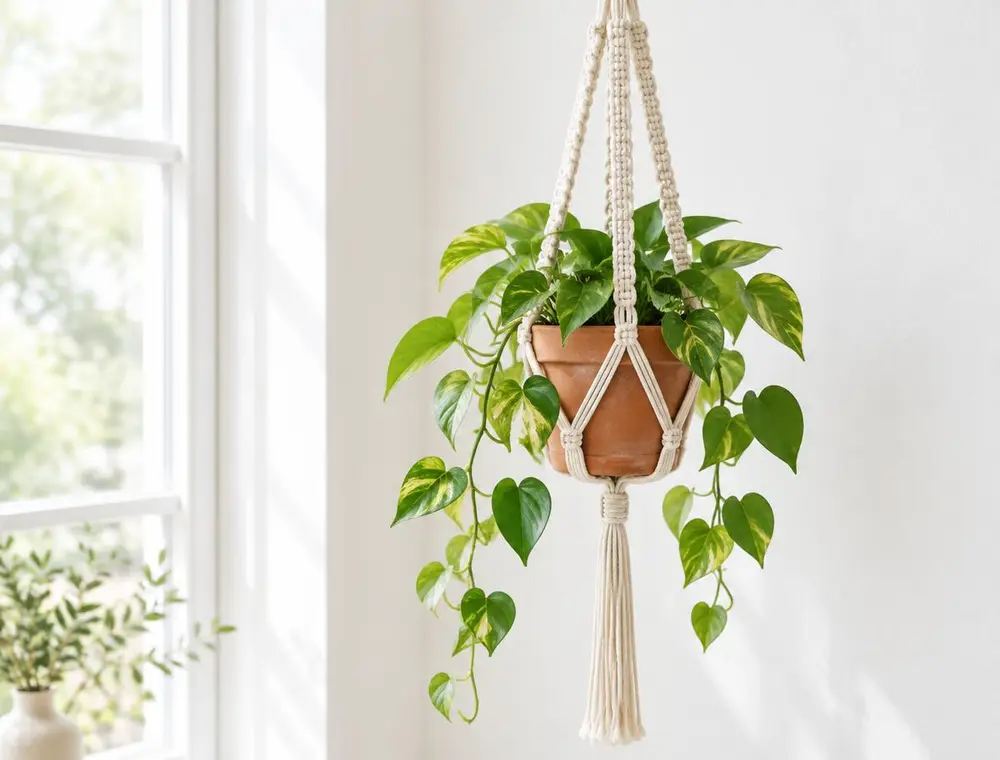
Learn the gathering knot, square knot and half knot, then use them to make a sturdy hanger for a small pot.
- Difficulty
- Moderate
- Time
- 2–3 hours
- Published
Introduction
A plant hanger is the classic first macramé project because it only needs a handful of knots and the result is genuinely useful. It also frees up shelf and window-sill space, which matters in a small flat.
This version holds a pot of 12–15 cm across. It uses eight cords, a wooden ring and three knots. If you have never tied a square knot before, practise a few on a spare piece of cord before you begin.
Materials Required
- Single-twist cotton macramé cord, 4 mm thick, about 30 m in total
- 1 wooden or metal ring, 5–6 cm across
- Measuring tape
- Sharp fabric scissors
- A hook, door handle or clothes rail to hang your work from while knotting
- A pot of 12–15 cm diameter to test the fit
Step-by-Step Instructions
Step 1: Cut the cords
Cut eight cords, each 3.5 m long, and one short cord of 1 m for wrapping. Long cords may seem excessive, but knots use up length quickly and it is far easier to trim extra than to add more.
Step 2: Attach the cords to the ring
Thread all eight long cords through the ring and fold them in half so the ring sits in the middle. You now have sixteen strands. Hang the ring from a hook at about head height.
Step 3: Tie the top gathering knot
Just below the ring, lay the end of the short cord along the bundle, wrap it tightly downwards about eight times, then tuck the end through the loop at the bottom. Pull the top end to draw the loop up inside the wraps, and trim both ends close. This is the gathering (or wrapping) knot.
Step 4: Make four arms with square knots
Split the strands into four groups of four. In each group, tie a column of six square knots. A square knot uses the two outer cords to tie around the two middle cords: left over, right under and through, then repeat in the opposite direction.
Step 5: Add a section of half knots
Leave a gap of about 15 cm on each arm, then tie ten half knots (the first half of a square knot, repeated on the same side). The arm will twist into a spiral naturally. This adds a decorative detail and a little stretch.
Step 6: Connect the arms to form the basket
Drop down about 10 cm. Take two strands from one arm and two from the arm next to it and tie one square knot to join them. Repeat around all four arms. Drop another 8 cm and repeat, this time joining the strands the other way, to make a diamond net.
Step 7: Finish with a bottom gathering knot
Gather all the strands about 6 cm below the last row of knots. Test with your pot first, adjusting if needed, then tie another gathering knot with a fresh short cord. Trim the tassel to the length you like and brush the ends out with a comb.
Helpful Tips
- Keep the tension of each knot similar; tight and loose knots side by side make the arms uneven.
- Use a piece of tape to label each group of four strands if you lose track.
- Check the length of each arm with a tape measure before joining them. All four should match.
- Single-twist cord gives a soft, fluffy fringe. Braided cord is stronger but does not comb out.
Safety Instructions
- Hang the finished planter from a ceiling hook rated for the weight of a watered pot. Wet soil is heavier than it looks.
- Do not hang it where a child or pet can pull on the tassel.
Frequently Asked Questions
How much weight can this hanger hold?
Made with 4 mm cotton cord and tight gathering knots, it comfortably holds a small terracotta pot with soil and a plant. For heavy ceramic pots, double the cords or use 5 mm cord.
What is the difference between a square knot and a half knot?
A square knot alternates sides each time, so it lies flat. A half knot repeats the same side, so a column of them twists into a spiral.
Can I use regular string or yarn?
Thin string will not hold the knot shapes and may stretch. Choose cotton macramé cord or a firm cotton rope of 3–5 mm.
Conclusion
Once you can tie the square knot without thinking, macramé opens up. A wall hanging, a keyring or a second plant hanger with longer arms are all natural next steps. Trailing plants such as pothos or string-of-hearts look especially good in a hanger.
Related articles
More diy crafts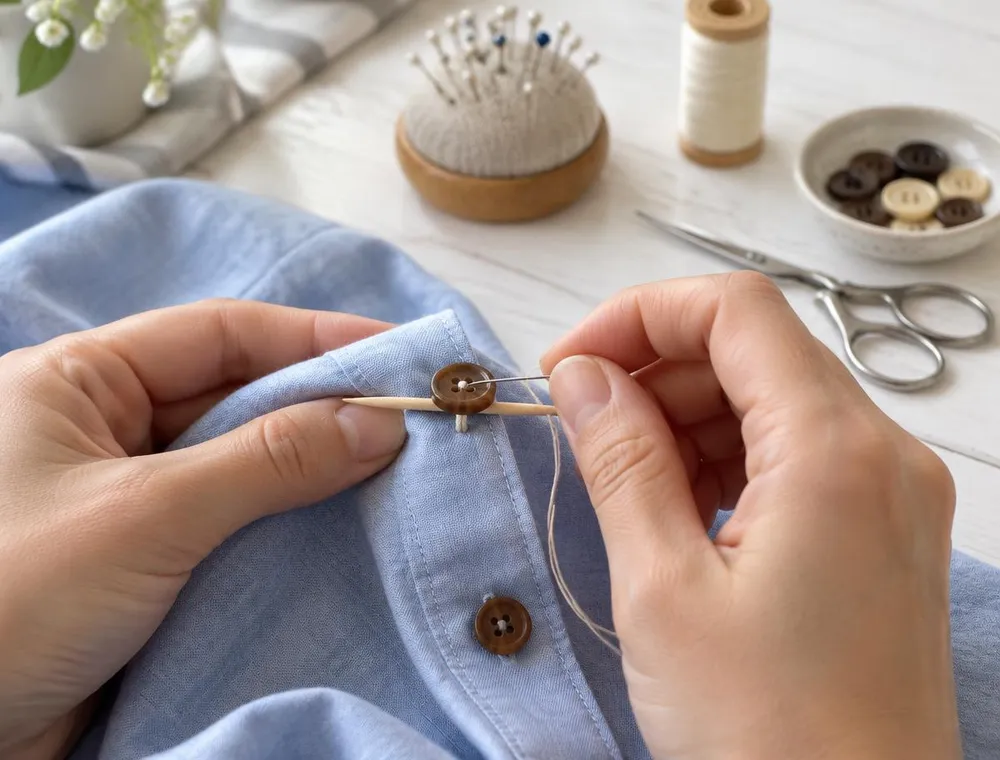
How to Sew a Loose Button Properly
A wobbly button is a quick fix once you know the method. Choose the right thread, mark the exact spot and build a small thread shank so the button stays on and still fits the buttonhole.
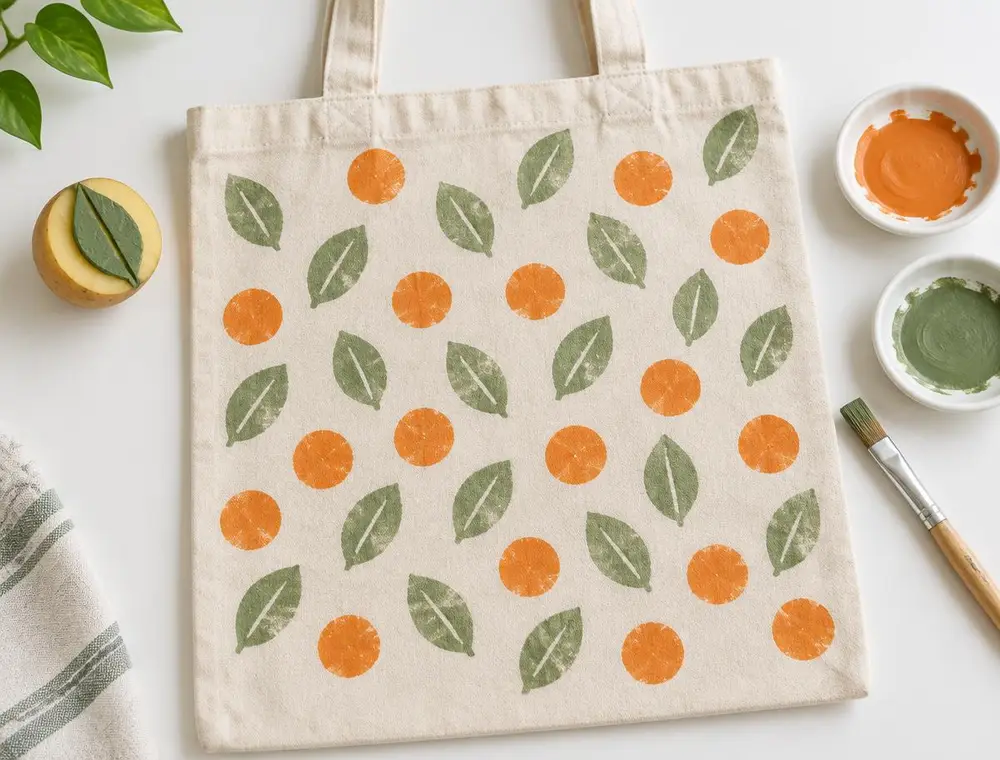
Hand-Stamped Canvas Tote Bag with Potato Stamps
Carve simple shapes into a potato, print a pattern onto a plain tote with fabric paint and heat-set it so it survives the wash.
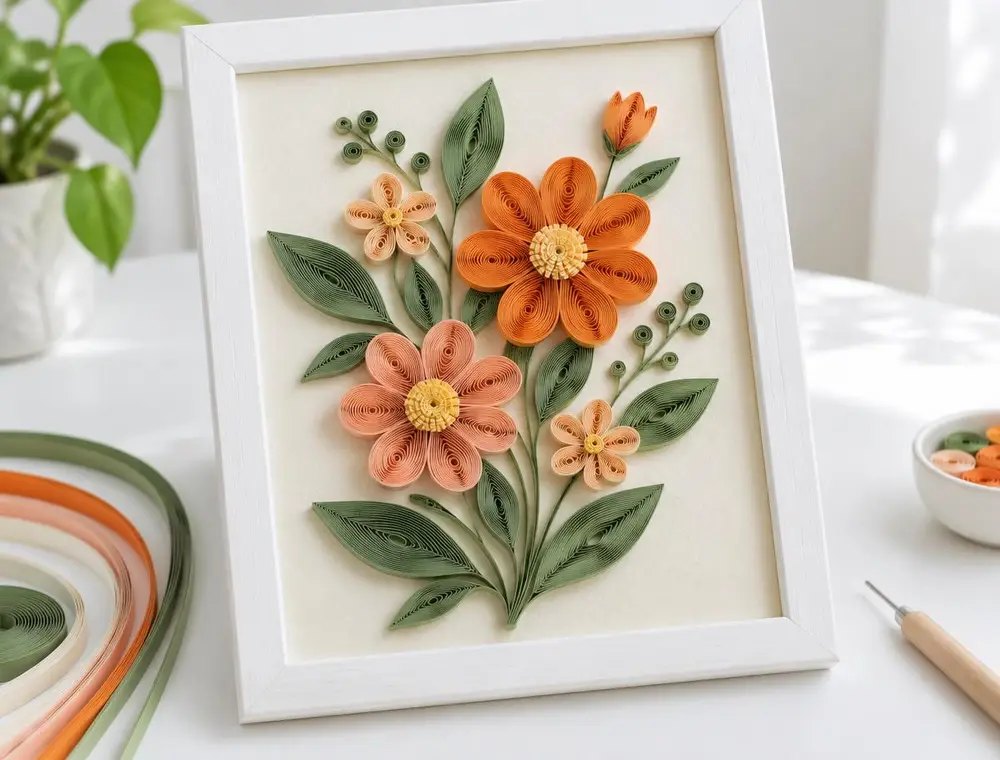
Paper Quilling Flower Wall Art for Beginners
Roll thin paper strips into coils, pinch them into petals and build a framed flower picture that looks far more difficult than it is.