Water Cycle in a Bag: A Window Science Project
Tape a decorated zip bag to a sunny window and watch evaporation, condensation and precipitation happen over a few days.
- Difficulty
- Easy
- Time
- 20 minutes plus observation
- Published
Introduction
The water cycle can feel abstract when it is only a diagram in a textbook. This project lets children watch it happen in a small, sealed space on their own window.
It is one of the easiest science projects to set up, which leaves more time for observing, drawing and explaining the results.
Materials Required
- 1 large clear zip-lock bag
- Permanent markers in blue, orange and green
- Water
- Blue food colouring (optional)
- Clear tape
- A sunny window
- A notebook for observations
Step-by-Step Instructions
Step 1: Draw the water cycle
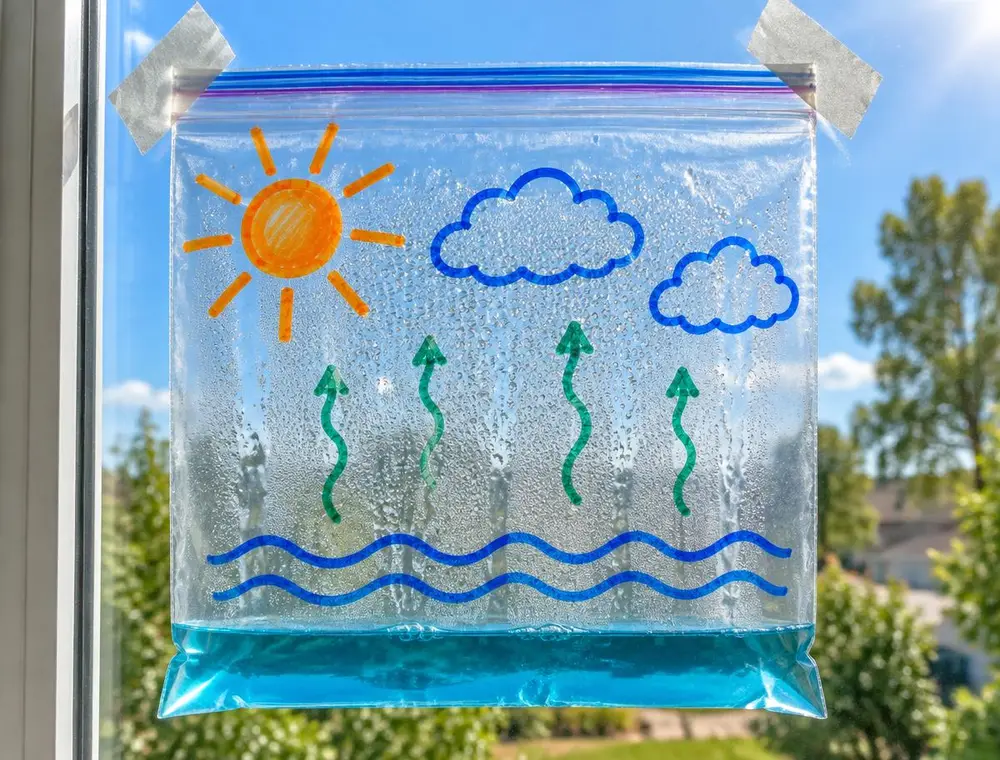
Lay the bag flat. Near the top, draw a sun in one corner and two clouds. At the bottom, draw wavy lines for the sea. Add arrows going up from the sea (evaporation) and down from the clouds (precipitation).
Step 2: Add the water
Pour about a quarter of a cup of water into the bag. Add one drop of blue food colouring so it is easier to see. Seal the bag tightly.
Step 3: Tape it to the window
Tape the bag flat against a sunny window, with the water at the bottom. A south-facing window (in the northern hemisphere) gets the most sun.
Step 4: Observe over several days
Check the bag in the morning, at midday and in the evening. Look for tiny droplets forming near the top and drops running back down the sides.
Step 5: Record what you see
Each day, draw the bag and write one or two sentences about what changed. Note the weather too, since sunny days give faster results.
Helpful Tips
- Use warm water to speed up the first results.
- Make two bags, one in the sun and one in the shade, and compare them.
- Photograph the bag at the same time each day for a neat presentation board.
Safety Instructions
- Make sure the bag is sealed so it does not leak.
- Keep plastic bags away from very young children.
Frequently Asked Questions
What words should I use to explain it?
Evaporation is when the sun warms the water and it turns into invisible water vapour. Condensation is when the vapour cools and turns back into droplets. Precipitation is when the droplets get heavy and fall, like rain.
Why is the water not disappearing?
The bag is sealed, so the water cannot escape. This is like the Earth: the same water is used again and again.
How long until I see results?
On a sunny day, droplets usually appear within a few hours.
Conclusion
This tiny window experiment shows a huge natural process. It is perfect for younger students and makes a clear, memorable presentation when paired with daily drawings or photos.
Related articles
More kids school projects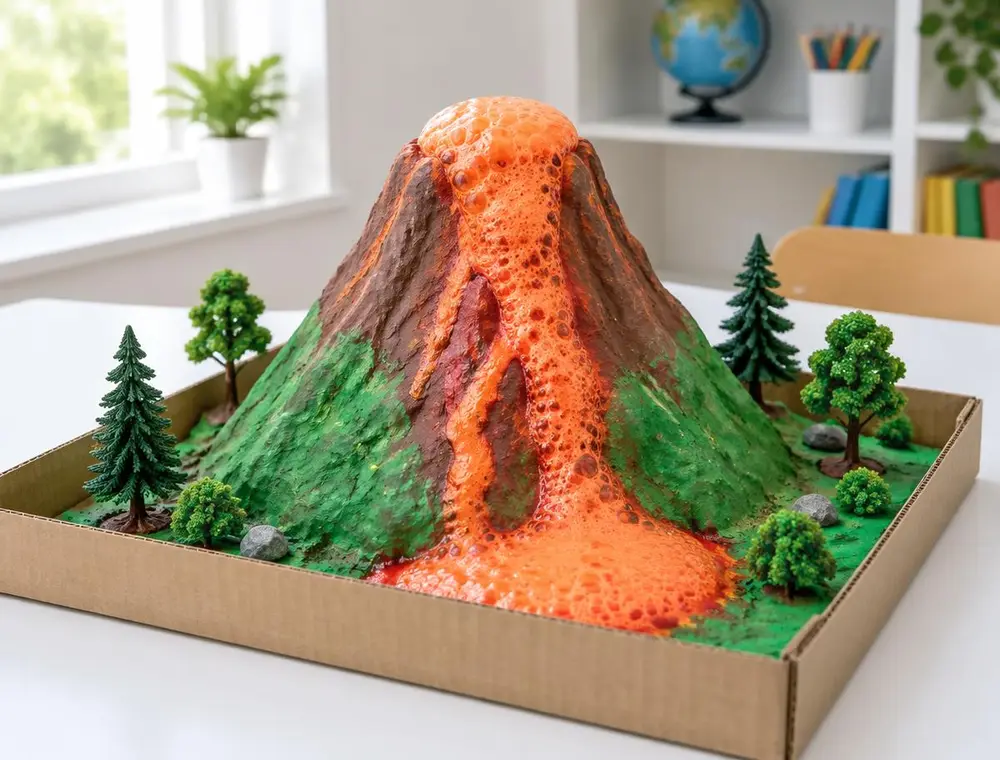
Baking Soda Volcano with a Clay Cone
Build a reusable volcano around a small bottle and make it erupt with baking soda and vinegar, with a clear explanation of the science.
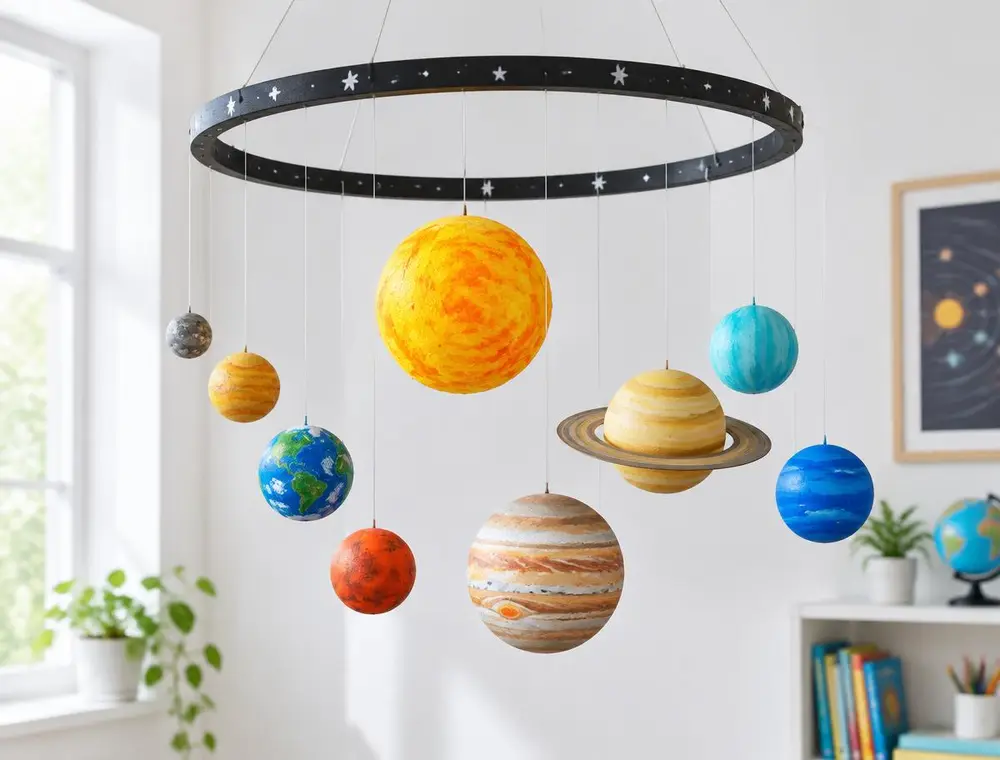
Hanging Solar System Model with Foam Balls
Paint foam balls as the Sun and eight planets, then hang them in order from a hoop to make a model that is easy to explain in class.

How to Sew a Loose Button Properly
A wobbly button is a quick fix once you know the method. Choose the right thread, mark the exact spot and build a small thread shank so the button stays on and still fits the buttonhole.